Sunday, June 17, 2018

Gambling in Regency England


Many romances set in Regency England often depict the characters gambling and engaging in high-stakes betting. In general, Regency gentlemen wagered on a wider range of activities including cards, dice, horse races, cock fights… well, pretty much anything.

Some of the most famous gentlemen’s clubs of London included White’s, Brook’s, The Cocoa Tree and Almack’s, and were often referred to as ‘golden halls’.  (Fun side note: Men’s clubs for the lower classes were called ‘copper hells’.)

ladygodinaprint


Card games were an acceptable pastime for both sexes at private parties and assemblies. For the most part, these games were meant to entertain but some gentlemen sought out more disreputable ‘gaming hells’ to satisfy their addiction. Great fortunes were won and lost at the gaming tables during this time period. 
Lucky for you, I compiled a list of the most common games played in the Regency period. Enjoy!

Card Games:

Whist- The precursor of today’s Contract Bridge, was one of the period’s most popular card games. The game requires four players, playing in partners. A trump suit is chosen and tricks are won. In Whist, strategy improves the player’s ability to win, so a poor player is a great frustration to a more skilled partner.

Piquet-  It is played by two players and has a complicated scoring system and possibilities of huge bonus points. Skill, strategy, and memory for cards are all very important for success in Piquet.

Loo- In its five card version, a permanent high trump is selected, called “Pam.” Like whist, the players play for tricks, but at the beginning of the hand, they may choose to play, fold, or pick up and play an extra hand dealt, called a “miss.” A player who wins no tricks is “looed.”

Vingt-et-un- Is essentially today’s game of Twenty-One. Each player tries to beat the dealer by earning twenty-one points or reaching a higher number of points without exceeding twenty-one.

Games of Chance:

Faro- is not really a card game but a game of chance using cards. It is played at a green baize table displaying pictures of playing cards. The player bets on whether a certain card will be dealt from a special wooden box.

Hazard- Is a dice game. The player must roll a certain number on the dice. There is some strategy involved in which numbers the player selects to roll, but Hazard is essentially a game of chance.

Monday, June 11, 2018

Doctors in the Regency Era

I bet you didn’t realize that there were several types of doctors in the Regency Era. There were physicians, surgeons, apothecaries, and midwives/accouchers. The type of doctor they were determined what they practiced and their place in society.

Physicians- The highest rung on the social ladder
During the early 1800’s, physicians were regarded as gentleman because of their extra schooling and lack of apprenticeship. These men avoided any manual labor that was associated with their profession and spent most of their time diagnosing patients and writing prescriptions.


In turn, physicians were well received by the families they treated and often were invited to social events. If they dined with the families, they would eat with them as a guest of honor.
Physicians were the only qualified doctor to use the title of “Doctor”. (Surgeons and apothecaries were addressed as “Mister”.)

Surgeons-


Surgeons occupied a lower rung on the ladder due to their lack of schooling. They learned their trade from an older doctor and basically learned on the job. They preferred surgeries but treated common ailments of ordinary people.


                                       Apothecaries


Apothecaries was considered a trade and ranked even lower on the social scale. They went through an apprenticeship to learn how to make drugs and poultices. In most rural areas, they were known to act as surgeons as well, making house calls and treating patients. But largely, they mixed drugs, dispensed them, and trained apprentices.

Midwives / Accouchers
In the early 1800’s, women often turned to midwives to help deliver their babies since midwives often had a higher survival rate than the doctors and surgeons of their time. (This was because midwives would wash their hands between their patients)

During the Regency period, the aristocracy started employing accouchers, which were male doctors who specialized in the childbirth from conception to delivery.

Monday, June 4, 2018

RELEASE DATE: July 1st


After a failed abduction attempt, Lady Rachel is sent into hiding on her uncle’s estate near the sleepy village of Rockcliffe on the shores of Scotland. As she struggles to cope with the nightmares of her past, she unwittingly stumbles into even greater danger than she left behind. And this time, Shadow isn't around to save her.
Luke Beckett, the Marquess of Downshire, was content running his stud farm in solitude, far from the scheming of the devious women of Society. That is, until his neighbor's infuriatingly contrary niece rides into his life. Hiding behind the guise of a common horse trainer, he begins to form a peculiar friendship with Lady Rachel, without the constraints of his title. However, the longer the ruse continues, the more Luke realizes there is much more at stake than just their friendship.
With the looming threat of a French invasion, Luke and Rachel must work together to stop the tangled web of treachery before it is too late. When the truth is finally revealed, will they have the strength to trust each other with their hearts, or will the fear of rejection destroy their relationship before it has a chance to begin?
                                      PREORDER AVAILABLE SOON

Monday, May 28, 2018

Why I read my kids Fairy tales

“If you want your children to be intelligent, read them fairy tales.” Albert Einstein is quoted as saying. “If you want them to be more intelligent, read them more fairy tales.”

As a mother, I love sharing fantastical adventures that will allow my children to believe that love will conquer all and good will always triumph over evil. I love seeing the smiles on their sweet faces as Cinderella marries her Prince Charming and hear the words ‘happily ever after’. Perhaps that is reason enough why fairy tales are important, because they make us happy. 

“Fairy Tales are more than true; not because they tell us that dragons exist,” English writer G.K. Chesterton says, “but because they tell us that dragons can be beaten.”
Let’s face it, life is hard. Negativity is everywhere. The reason why Fairy tales are so important is because they remind us to dream. It allows us to dare to believe that there’s our very own happy ending somewhere out there waiting to happen. 

Life itself is the most wonderful fairy tale of all. — Hans Christian Anderson

I grew up singing the songs of The Little Mermaid, Beauty and the Beast, and Aladdin. However, my favorite Disney Princess song is when Belle is standing in a wide, expansive field and you can hear the emotion in her voice as she sings: 

I want much more than this provincial life
I want adventure in the great wide somewhere
I want it more than I can tell
And for once it might be grand
To have someone understand
I want so much more than they've got planned

I want my children to believe they are truly capable of accomplishing anything in this world through hard work; to be strong enough to break through barriers and stereotypes; to have hope despite the evils that are so prevalent in this world today. Most importantly, I want them to understand that even though life is not easy, it can be vastly rewarding when we are striving to be kind.

So yes, I read my children Fairy tales. I fill their heads with stories of flying carpets, sleeping princesses, and girls that can save the world. I remind them that you don’t have to be perfect to have your own happily ever after, but you do have to believe that it is possible to have one.

Wednesday, May 9, 2018

GRAVESEND: A SMUGGLER'S PARADISE


My next book takes place in the ancient town of Gravesend, located in Kent, England. This town is rich in history, birthplace of Charles Dickens, and the final resting place for Pocahontas.

Back in the 18th century, the Thames estuary coast was not easily defined. All ships heading for London had to thread their way through treacherous channels and numerous mud-banks to find a safe harbor.
Many ships made unscheduled stops in the sticky mud, claiming their overnight wait was for the tide to shift. However, more times than not, this was just a ploy to unload half their cargo into small boats that suddenly appeared out of the gloom. From the ship's deck, the crew members would toss out parcels into the passing rowing boats.

Once ashore, and into the hands of the smugglers, pursuit was virtually impossible by the Revenue men, since the low-lying lands had large brackish pools and wide drainage dykes. 


Furthermore, it has been claimed that the smugglers dug a network of tunnels, which ran the length of Gravesend.


Gravesend was truly a smuggler's paradise.


Monday, May 7, 2018

1800's Medical Cures... Some worked. And some fell far short.


As I have been researching the medical practices of the early 19th century, I have found myself in awe at some of the medications that were administered for various ailments. Due to the lack of knowledge at the time, doctors tended to treat the symptoms, rather than the disease.
During the 19th century, hospitals were only located in large cities and most physicians catered to the upper classes of society, leaving apothecaries or midwives for the lower classes.

Most of medicines that were prescribed were used to make the patient as comfortable as possible, while nature took its course and the patient could heal on his own. It is interesting to note that some treatments are still used today, such as baking soda to brush the teeth or ease indigestion.
I have complied a list of common ailments and the recommend medical cure in the 1800s:
  1. In 1849, Mrs. Winslow's Soothing Syrup was
    marketed for restless infants and small children, who were teething. Unfortunately, each bottle contained 65 mg of pure morphine… and so much more.
  2. Camphor was known to ease itchy skin.
  3. Mercury was a common elixir that was supposed to rejuvenate the body. (It also was a “cure” for syphilis.)
  4. Opium was known to stop diarrhea almost instantly
  5. Apple pectin was known to stop arthritis, as was honey.
  6. Bloodletting was used for, well, basically everything. By withdrawing blood
     from a patient, it was believed that it helped cure illness and disease. Sadly, this “cure” went on for over 2,000 years and finally ended in the late 19th century.
  7. Castor oil was used for everything from a general health tonic to a chest compress for coughs and colds.
  8. Teas made from motherwort were often used to “calm the nerves.” (On a good note, this is a mild sedative and it works remarkably well.)
  9. Painful menstruation was often treated with a tea of red raspberry leaves.
  10. Women suffering from fainting spells were often given a large tablespoon of vinegar.
  11. Cures for colds and the flu were varied but drinking rabbit dung tea seemed to be effective.
What cure is your favorite?

Monday, April 30, 2018

The Unfortunate Business of Wife Selling

During the 18th and 19th century, women had very few rights in England. Women were not allowed to vote, attend universities and were considered their husband's property.  

The vile practice of wife selling, while not common, but not unheard of either, occurred most often in the more humble classes. Sadly, magistrates did not believe they had a right to prevent wife sales, especially since the Poor Law Commissioners were known to force husbands to sell their wives, rather than maintain them at the workhouse. 

The newspapers mention this happening at a rate of about once a year.


The following is excerpted from Popular Pastimes, Being A Selection Of Picturesque Representations Of The Customs & Amusements Of Great Britain published in 1816:

AMONG the customs unknown to the law in this country, though by the illiterate and vulgar supposed to be of legal validity and assurance, is that of SELLING a WIFE, like a brute animal, in a common market-place. At what period this practice had origin we have not discovered, but it has unquestionably been in existence for a long series of years; and many instances might be given of the extensive spread of this licentious custom in more modern times. From newspapers of different dates, now before us, the three following cases are selected, in order to shew that the metropolis does not alone participate in the disgrace which springs from the legislative tolerance of this irreligious and indecent custom ; but that other parts of England are equally involved in the shame of such a scandalous profligacy. It merits, indeed, the greater reprehension, from the foul stigma which it fixes on our national character; and though the magistracy may not, at present, be armed with sufficient powers to put a stop to a practice so highly censurable (though we doubt the assumption ; for whatever is contrary to good morals, is assuredly amenable to the law) ; the Parliament should immediately interfere, and prevent its longer continuance by the infliction of punishment.

Under the date of June the 12th, 1797, we read thus : ‘“ At the close of Smithfield-market on Monday, a man who keeps a public house in the neighbourhood of Lisson-green, brought his Wife, to whom he had been married about two months, for sale into the market; where having by means of a rope, made her fast to the railing opposite St. Bartholemew’s coffee-house, she was exposed to the view of hundreds of spectators for near a quarter of an hour, and at length sold, for half a guinea, to a dealer in flowers, at Paddington. He is to receive with the woman, from her original owner, twenty pounds in bad halfpence.” The second instance was on the 11th of March, 1808, when “ a private individual led his Wife to Sheffield market, by a cord tied round her waist, and publicly announced that he wanted to sell his cow. On this occasion, a butcher who officiated as auctioneer, and knocked down the lot for a guinea, declared that he had not brought a cow to a better market for many years.” The last of the three instances occurred on  the 27th of March, 1808, when “ a man publicly sold his Wife to a fisherman, in the market at Brighton, for twenty shillings and a blunderbuss.”

(Just in case you were wondering, a blunderbuss is a short-barreled large-bored gun with a flared muzzle, used at short range.)

Monday, April 23, 2018

Odette Samson... A real spy during WWII

My Regency Spy Romances feature characters, both men and women, that are agents of the Crown and who are fiercely loyal to their King and Country.
Sadly, my characters are fictional, but I would like to highlight a real female spy during WWI. Her name was Mrs. Odette Samson. She was recruited by the Special Operative Executives (SOE), which had been established to conduct missions of intelligence, espionage and sabotage throughout Western Europe.
Sansom was a devoted wife and mother who had initially resisted the recruitment efforts due to her children, especially since her husband was already deployed and fighting in the war. However, her duty to her country finally won out and she agreed to attend the training. During training, she excelled at unarmed combat, weapons handling, Morse code and the art of sabotage.
Leaving her three kids with the nuns of St. Helen's convent school was exceptionally difficult, but she soon was deployed and joined the few other female spies in the Allied operation. In France, she was put to work as a bicycle courier, carrying messages from her spy cell to other resistance member and also conveyed her cell’s intelligence reports to an agent who flew them back to SOE headquarters in London. Furthermore, she worked as a radio operator, which was a very dangerous but important job. 

In 1943, Sansom was betrayed by a German officer posing as an SOE agent. She was taken to the notorious Fresnes Prison, where Gestapo officers tortured her relentlessly. Still, she gave up no information and helped save the life of her commanding officer by denying his involvement.

When she was sentenced to death on two counts of espionage, Sansom replied, “You will have to make up your mind on which count I am to be executed because I can only die once!”

She was sent to Ravensbrück women’s concentration camp north of Berlin, but managed to survive the harsh ordeal.
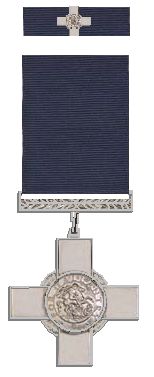
George Cross.jpg

In 1946, Sansom became the first woman to receive the George Cross for gallantry, Britain’s highest nonmilitary award. 

Monday, April 16, 2018

Fun Facts about Napoleon


For anyone that has read my books, it should come as no surprise that my characters were not fans of the French. This was mostly due to the Napoleonic Wars.

Napoleon was the French Emperor from 1804 until 1814, and again briefly during 1815. He was known to be domineering to the world but had a tender spot for his wives and mistresses. 

I have collected six lesser known facts about Napoleon that I thought you might enjoy. Two funny facts about the French Emperor are thrown into To Love a Spy, but you will have to read my book to discover those.  

Fun Facts:

1. Napoléon's Army discovered the Rosetta Stone.

2. He would often dress in poor clothes and walk the streets of Paris asking people questions. This way he could judge how popular he was.

3. It was Napoléon's army that first used canned foods

4. Napoléon allegedly wore a packet of poison on a cord around his neck. When he finally went to use it in 1814 it had lost its potency and only succeeded in making him violently ill

5. Attempts to rescue Napoléon from St. Helena included an elaborate submarine plan.

6. Beethoven originally planned to dedicate his Third Symphony to Napoléon. 


Reader's Favorite

It's official. I am an award-winning author (and I have the picture to prove it)